♛
reliquaire
what is fate, if not careful design?ㅤ
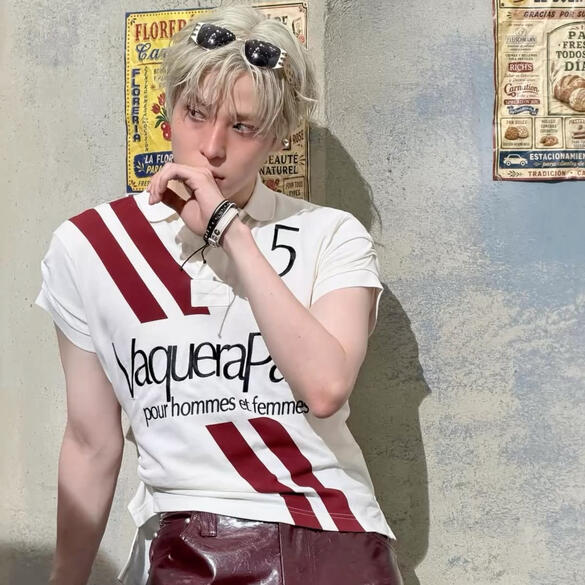
ㅤjiwon / he/him / strictly ic
nicknames ;; won, JJ.
age ;; 26.
birth date ;; november 13.
gender ;; male.
sexuality ;; bisexual.
relationship status ;; married. singleship.
zodiac sign ;; scorpio.
occupation ;;
serial killer.fashion designer.
ㅤheightㅤ 190cm (6'3")
ㅤeyesㅤㅤ brown.
ㅤhairㅤㅤ naturally dark brown, currently blond.
ㅤface claimㅤㅤ jeong yunho.
ㅤlanguagesㅤㅤ english, french, korean.
| likes |
|---|
| music. the sound of scissors cutting fabric. eye contact. beverages. late nights. neutral colors. museums & galleries. physical touch. |
| dislikes |
|---|
| being ignored. chaotic environments. sudden changes in plans. loose ends. fast fashion. bright colors. |
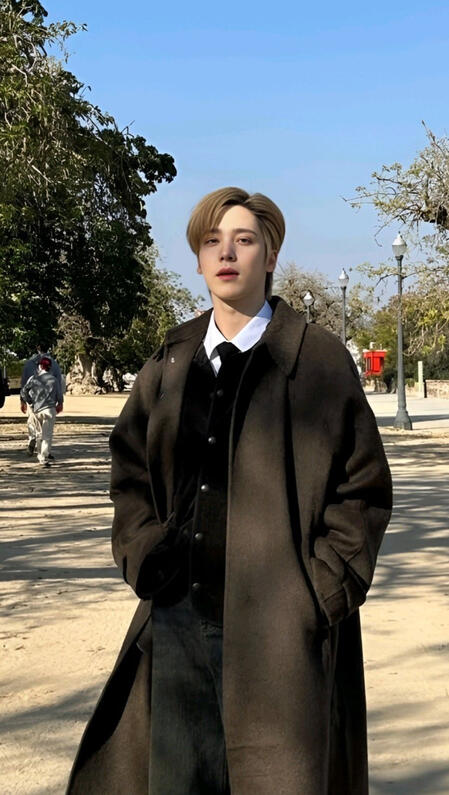
❝every breath you take. every move you make. every smile you fake. every vow you break. i'll be watching you.ㅤ❞
fashion house: maison reliquaire, est. 2021, paris. it's a brand devoted to preservation, permanence. the name is self-explanatory, something sacred kept safe. in interviews, Jiwon describes his brand as "a study of what remains." no one's ever questioned what had to disappear, for something to remain.
signature piece: The reliquary coat. Fashion magazines have called it "protective", saying it feels like an armor.
personalityㅤ
In public, he is composed to the point of sculpture. His posture is exact, his speech measured, his expressions calibrated just slightly behind his thoughts. He listens more than he speaks, and when he does speak, it is deliberate, concise, reflective, just vulnerable enough to seem human. He understands optics instinctively.
He is disciplined, highly intelligent, and obsessively observant. He notices everything: the way someone hesitates before answering a question, the brands they wear when they want to impress, the micro-expressions that flicker when a name is mentioned. He stores these details. Not sentimentally — structurally. People are patterns to him. Variables. Textures. Weak points.Emotionally, he experiences attachment not as warmth, but as acquisition. When he becomes interested in someone, it is all consuming. He studies them with the same focus he gives to crafting a new collection. Their routines become familiar. Their insecurities become entry points. Despite the fact that he does not rush, he is not a very patient man, but has learned to control it well enough for the intended purpose.He does not see himself as cruel. In his mind and narrative, he is devoted, more devoted than anyone else could ever be. To him, love means permanence, exclusivity, ownership.
Rejection destabilizes him in a way nothing else does. It fractures the illusion of control he carefully maintains. When someone pulls away, he does not feel heartbreak first — he feels insulted by unpredictability.Privately, he struggles with an intense fear of abandonment, though he would never call it that. He equates being left with being erased. To prevent erasure, he ensures significance. He must be unforgettable. Necessary. Vital.
There is a quiet narcissism beneath his elegance — not loud or flamboyant, but rooted in the belief that his perspective is superior, his love deeper, his vision clearer. He genuinely believes he sees potential in others that they cannot see in themselves. That he elevates them. That without him, they would remain unfinished, like a shelved sketchbook.Everything is calculated. He knows when to tilt his head, when to soften his voice, when to let silence stretch. He can manufacture intimacy with surgical precision. People feel seen by him because he has studied them thoroughly. He frames this monitoring as devotion. He remembers everything, and will position himself as the only one who understands the person. He makes sure to create dependency through emotional monopolization.
biographyㅤ
Jiwon learned early on that grief was a costume people never questioned — at 18 years old, to be precise.
To the world, he is the personification of refinement, a visionary in the fashion industry whose sharp tailoring and colder-than-marble poise have made him a darling of elite circles. Cameras adore him. Interviewers swoon for him. Clients describe him as “intense” and “passionate.” They mistake calculation for charisma, obsession for dedication.That is his greatest talent; not the product, but the performance.Beneath the immaculate suits, the dresses that fit like a second skin, the carefully crafted and rehearsed vulnerability lives a man who does not love—he acquires.
He studies people the way he studies fabric: texture, weakness, stretch points. The slightest spark of interest becomes fixation. A passing smile, a shared glance, a polite compliment—he will build a life out of it.From a distance, at first. Merely watching. Learning routines. Mapping out desires and insecurities. Jiwon inserts himself slowly, deliberately, until coincidence feels like fate. Then dependence blooms. He isolates with devotion, suffocates with affection, he doesn’t need words to convince them that no one will ever understand them the way he does. Eventually, they believe they need him just as much as their lungs need air. And he needs them to belong to him.His public tragedy—the loss of his parents in a devastating car crash—cemented his reputation as a fragile prodigy who triumphed over heartbreak. Sympathy poured in. Investors opened doors. The inheritance they left behind financed the empire he now commands. No one questioned the accident. No one looked closely enough at the brake lines.He had loved once. Or something close to it, close enough that he mistook it for permanence, stability. His parents’ disapproval of his boyfriend felt like sabotage, an intolerable obstruction to the perfect future he had already scripted in his mind. Obstacles, in his mind, are meant to be removed, not to overcome them. He told himself it was justified. Necessary. Romantic, even.But love, when confronted with horror, does not stay loyal.When his boyfriend discovered the truth, fear was quick to replaced affection. Distance replaced devotion. The breakup shattered the illusion Jiwon had constructed. Rejection, to him, is annihilation. The same meticulous planning, the same cold precision, ensured the other man did not survive long enough to become a distraction, another obstacle. In the end, it only aided poor Jiwon’s reputation, having lost what the public deemed as “the love of the designer’s life” so closely after his parents. He played into it, of course.Now he moves through society wrapped in applause and admiration, a man celebrated for his vision and resilience. No one sees the pattern. No one notices how intensely people orbit him, or how they eventually disappear from his life as if they were nothing but last season’s collection.He does not believe himself to be a bad person, or a monster. He doesn’t feel remorse, or guilt.
He believes he is destined. Fated.
And anyone who stands between him and his version of happiness eventually becomes just another discarded design in his sketchbook.